

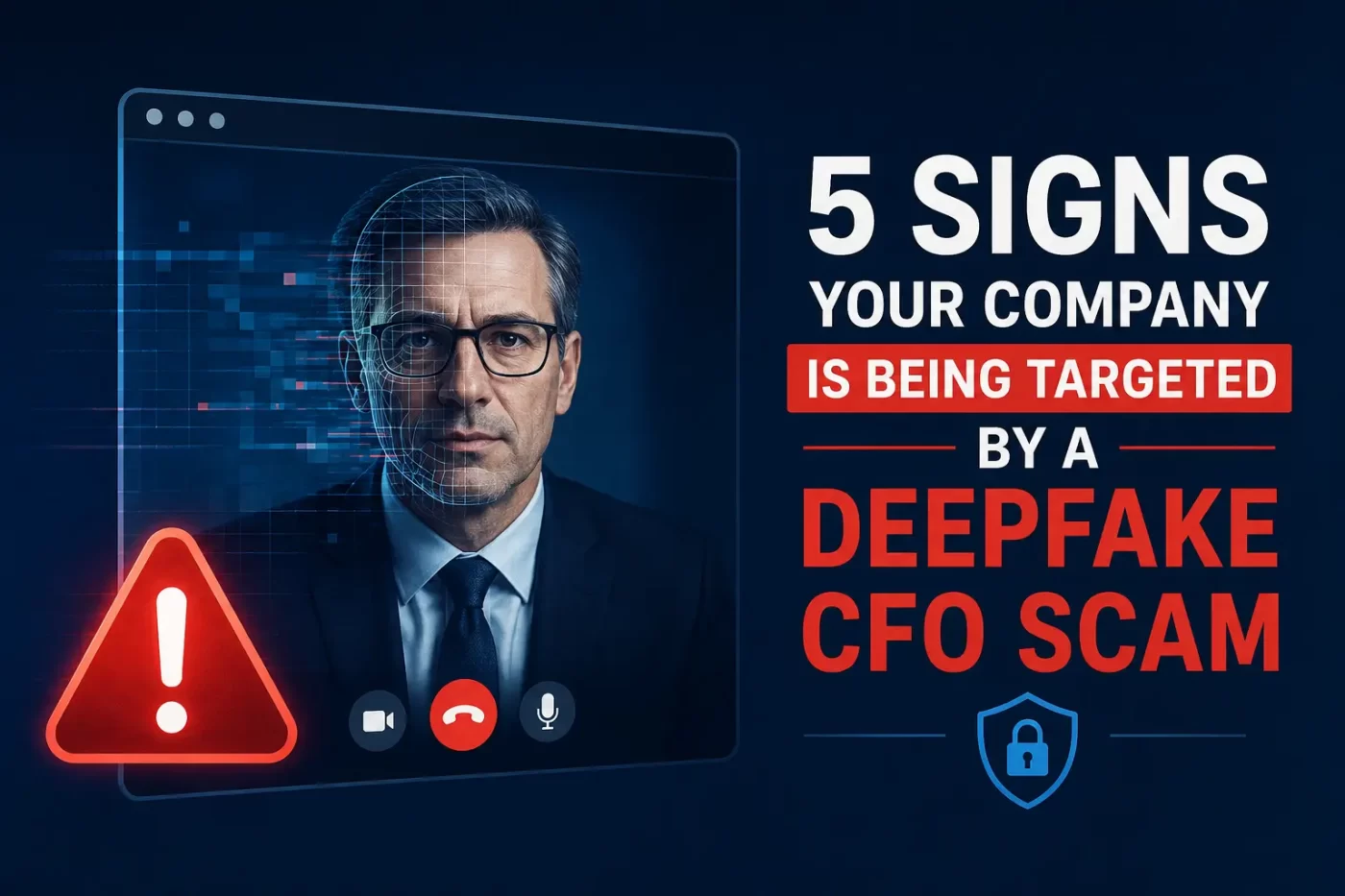

What Is a Deepfake CFO Scam?
A deepfake CFO scam is a sophisticated cyber attack where threat actors use AI video generators and voice cloning technology to impersonate a Chief Financial Officer or executive. The attackers create realistic video calls or audio messages to trick employees into transferring funds or exposing credentials.
-
Attackers clone executive video and voice assets to bypass standard enterprise identity checks.
-
Common visual red flags include awkward blinking, unnatural lighting, and distorted face edges.
-
Financial urgency combined with secrecy demands usually signals active synthetic identity fraud.
-
Mandatory out-of-band verification prevents fraudulent transfers even if video feeds look real.
-
Indian organizations are targeted frequently via IM platforms, email, and corrupted video calls.
A deepfake CFO scam leverages generative artificial intelligence, real-time voice cloning, and synthetic media models to clone C-suite executives during digital interactions. Threat actors combine social engineering techniques with business email compromise deepfake operational strategies to manipulate finance staff. By creating hyper-realistic video conferences or audio messages, cybercriminals command staff to initiate immediate wire transfers or release sensitive corporate credentials, bypassing traditional perimeter defenses. Defending against these attacks requires robust out-of-band verification procedures, mandatory multi-person payment approvals, and real-time deepfake detection tools embedded into organizational communication channels.
5 Red Flags of an AI Executive Impersonation Scam
A deepfake CFO scam does not happen in a vacuum. Scammers combine social engineering with synthetic media to catch finance employees, school accountants, and Windows network managers off guard. Recognizing physical and technical anomalies early keeps your bank balances secure.
+-----------------------------------------------------------------------+
|                       DEEPFAKE SCAM DETECTION                         |
+-----------------------------------------------------------------------+
|  [ Visual Glitches ] -> [ Audio Distortions ] -> [ Extreme Urgency ]  |
|          |                      |                       |             |
|          v                      v                       v             |
|  Look for irregular    Listen for metallic     Demand for immediate   |
|  blinking and shifts   latency or unnatural    out-of-band phone call |
|   in jaw alignment       robotic cadence       verification check     |
+-----------------------------------------------------------------------+
1. Unnatural Visuals in Video Conference Scams
Synthetic video generation engines struggle with real-time physical rendering. Watch the presenter’s eyes and face boundaries during remote video calls.
-
Infrequent Blinking: Natural human eyes blink every 2 to 10 seconds. AI avatars often fail to replicate natural blink rates.
-
Edge Distortions: Look closely at the executive’s jawline, eyeglasses, or hairline. When the speaker turns sideways, software glitches often blur background boundaries.
-
Lighting Mismatches: If the speaker’s face lighting does not match their background atmosphere, the video is likely synthetic.
2. Audio Artifacts in Voice Cloning Fraud
Voice cloning software needs minimal sound samples to mimic a leader’s pitch. However, real-time speech rendering leaves recognizable digital footprints.
Listen for weird pauses between sentences. Fraudulent audio feeds frequently feature metallic distortion, sudden background silence cuts, or an uncharacteristically flat tone during high-stress conversations. If your leadership team normally speaks with distinct regional expressions or specific terminology, pay attention when those disappear.
3. High-Urgency Requests for Wire Transfer Fraud
Every executive impersonation scheme relies on engineered panic. The fraudster claims that an acquisition, audit payment, or emergency vendor clearance will fail without an immediate RTGS or NEFT transfer.
They instruct finance handlers to bypass normal payment queues. “Do not wait for standard clearance—process this transfer now and we will file paperwork later.” True financial leadership respects internal governance controls.
4. Requests to Bypass Dual Control Controls
A favorite tactic of financial fraudsters is separating the target from established company policies.
-
They order you to keep the payment private from internal controllers or auditors.
-
They invent confidential corporate deals to justify secret instructions.
-
They claim direct authority to override secondary approval workflows.
5. Suspicious Business Email Compromise Deepfake Signals
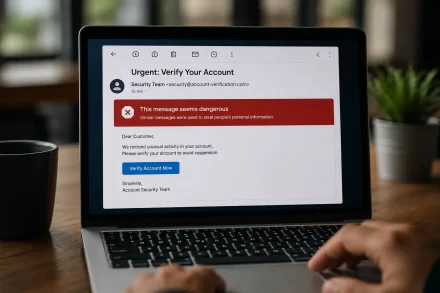
Modern generative attacks blend synthetic audio-video media with phishing emails. You might receive a quick video message along with a follow-up email from an address that looks accurate at first glance.
Inspect domain headers closely. Fraudulent messages often use typosquatting techniques (e.g., @secur1ty-biz.in instead of @securebiz.in). The video link usually hosts software designed to grab session tokens or direct you toward unverified payment portals.
How Deepfake Fraud Targets Indian Businesses and Schools
Attack trends across India show that cybercriminals target diverse sectors, from tech firms in Bengaluru to educational trust accounts in Pune.
                  ATTACK RISK TARGETING IN INDIA

  [ IT & Software Firms ] --------> High-value offshore wire transfers
  [ Schools & Colleges ] ---------> Multi-signatory tuition fund overrides
  [ Computer Resellers ] ---------> Emergency inventory purchase requests
School administrators, IT hardware resellers, and enterprise finance personnel are vulnerable because they process frequent vendor payouts. Scammers study corporate structures on public platforms, extract audio samples from publicly posted speeches, and execute impersonations when primary executives travel overseas.
Practical Deepfake CFO Scam Prevention Tips for Systems Teams
IT personnel, Windows administrators, and systems teams must build procedural and technical defenses.
-
Enforce Mandatory Out-of-Band Verification: Never approve large financial transactions based solely on incoming video calls or emails. Verify requests through a secondary channel, such as an established phone number or in-person check.
-
Establish Duress Passphrases: Create offline, unwritten security phrases that executives must state before initiating non-standard capital movements.
-
Deploy Endpoint and Network Safeguards: Block unauthorized external video plugins across your Windows desktop base and set up automated email authentication protocols (SPF, DKIM, DMARC).
-
Train Finance Personnel: Conduct interactive simulation runs for accounts staff so they recognize synthetic visual artifacts and aggressive social engineering tactics.
Deepfake Risk Comparison across Organization Types
| Organization Type | Primary Vulnerability | Typical Attack Vector | Key Defense Strategy |
| Enterprise Businesses | Complex multi-tier finance chains | Synthetic video conference scam | Out-of-band verification & multi-party approval |
| School & College Trusts | Centralized authority structures | Voice cloning fraud via phone call | Passphrase challenges & offline bank validation |
| Computer Resellers | High-frequency inventory payouts | Business email compromise deepfake | DMARC controls & vendor bank verification |
| IT Services / MSPs | Remote executive communication | Compromised Zoom/Teams sessions | Real-time deepfake detection plugins |
| SME Businesses | Single-point accounting roles | Direct social engineering calls | Dual-authorization workflows for all payouts |
What to Do Immediately When Targeted
If an employee suspects they interacted with a synthetic persona or transferred funds to a fraudulent account, execute this response protocol:
-
Freeze Accounts: Contact your commercial bank’s fraud unit immediately to freeze outgoing RTGS/NEFT/SWIFT transfers.
-
Document Metadata: Record the call details, preserve video recordings, capture email headers, and archive chat logs.
-
Report to Authorities: In India, file a report on the National Cyber Crime Reporting Portal (cybercrime.gov.in) or dial 1930 right away.
-
Isolate Systems: Disconnect endpoints used during the incident to prevent secondary credential theft across your network.
How do you know if a video call is a deepfake?
Observe facial movements and eye activity during the feed. Look for infrequent or erratic blinking, unusual light reflections around eyeglasses, synthetic distortion near jaw lines, and unnatural audio delays. Asking the speaker to turn their head sideways often disrupts real-time AI visual rendering.
Can deepfake CFO scams happen to Indian companies?
Yes, Indian enterprises, academic institutions, and supply-chain firms are frequent targets. Attackers take advantage of high-value payment channels and public executive media assets to target accounts teams with convincing voice clones and synthetic video calls requesting urgent RTGS or NEFT transfers.
What should employees do if asked for urgent fund transfer on video call?
Stop the payment process immediately. Never transfer funds based on an isolated remote video or audio request. Call the executive using a pre-verified internal phone number or execute an offline authentication check using a company duress word before taking action.
What is the best defense against voice cloning fraud?
The most effective defense combines multi-tier payment approvals with out-of-band authentication practices. Require at least two authorized signers for high-value payouts and ensure independent phone confirmation protocols are followed every time, regardless of who makes the request.
Which deepfake CFO scam detection tool is best for IT admins?
IT administrators should implement deepfake detection solutions integrated into video conference tools alongside advanced email security suites. Combining endpoint verification plugins, strict DMARC policies, and behavioral analysis software provides robust protection against incoming synthetic media.
Written by the SecureBiz Threat Intelligence Group, led by certified information security specialists (CISSP, CISM) with over 12 years of experience defending Indian enterprises, academic trusts, and IT networks. Our research team specializes in analyzing generative AI attack vectors, executive impersonation schemes, and enterprise security policy enforcement across regional digital infrastructures.
FAQs
Q: What is a deepfake CFO scam and how does it work?
A: A deepfake CFO scam uses generative AI to clone executive video and voice characteristics. Cybercriminals use these clones during live calls or via sent media to trick employees into making fraudulent money transfers or sharing login credentials.
Q: How do fraudsters execute voice cloning fraud during telephone calls?
A: Attackers collect audio samples from public speeches, interviews, or promotional videos. They feed these samples into AI sound engines to generate realistic audio in real time, letting them speak directly with finance managers over standard calls.
Q: What should an employee do if an urgent transfer request feels suspicious?
A: Pause the transaction immediately. Disconnect the current communication channel and contact the executive directly through a separate, pre-established phone number or in-person check. Never bypass payment rules for supposed emergencies.
Q: Which out-of-band verification method is best for preventing wire transfer fraud?
A: The most effective method is a direct phone call to a pre-registered phone number, paired with pre-agreed security passphrases and a mandatory dual-person approval process inside the accounting system.
Q: Is it worth investing in deepfake CFO scam detection tools for IT admins?
A: Yes. Investing in real-time deepfake detection plugins and advanced email protection significantly reduces the risk of credential theft and multi-million rupee financial losses caused by social engineering schemes.
Q: Where can system admins download an anti-fraud incident response policy?
A: You can download customizable incident response templates from the SecureBiz Resource Center. Select the anti-fraud policy packet to get actionable operational guides for your IT department.
Q: Does SecureBiz provide anti-fraud security audits for schools and companies in India?
A: Yes, SecureBiz offers detailed security assessments, staff simulation workshops, and executive threat reviews tailored for businesses, educational organizations, and computer resellers across India.
Q: What happens if an employee transfers money to a deepfake scammer in India?
A: Report the event immediately to your bank’s emergency cyber fraud division to freeze processing. Then log a case on India’s national cybercrime portal (cybercrime.gov.in) or call 1930 within two hours to improve recovery chances.

Leave a Comment