

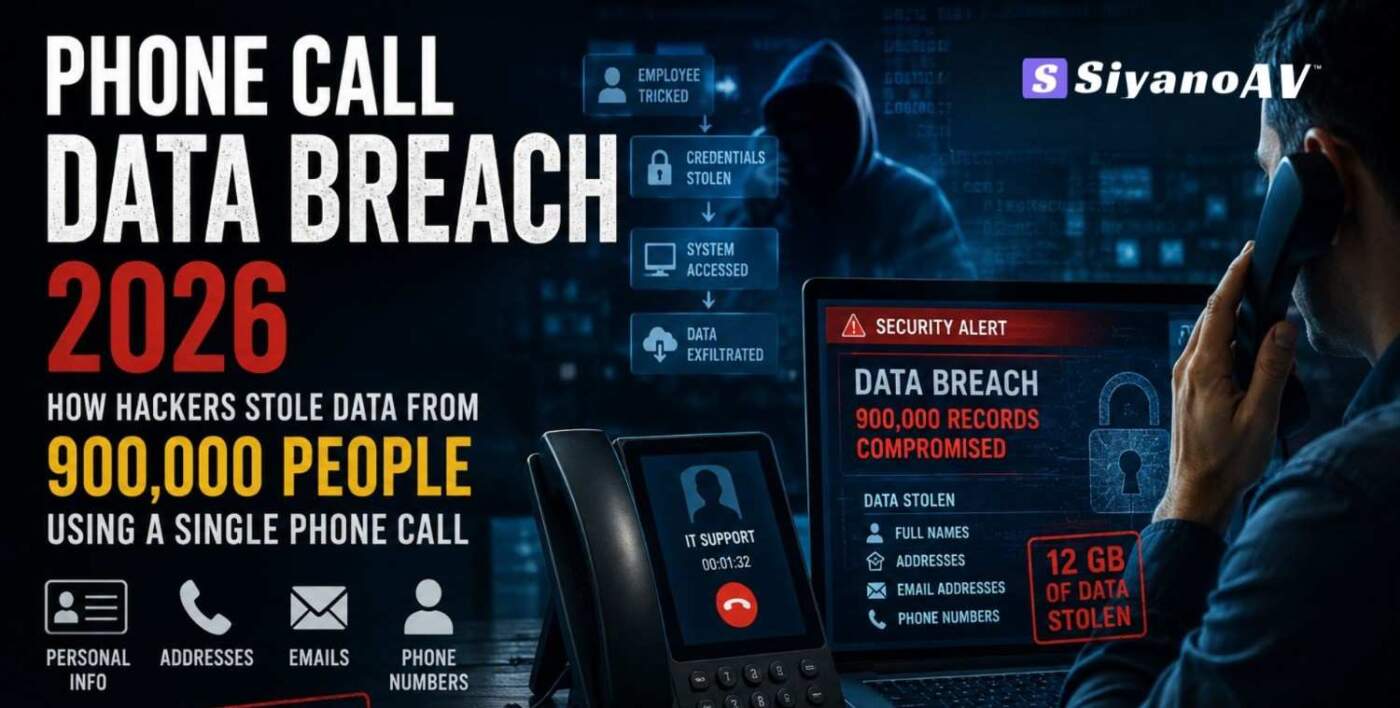

Imagine paying a company every single month to keep your personal information safe — your name, your address, your entire digital identity. Now imagine that the same company gets hacked just because one employee casually answered a phone call and unknowingly gave away the wrong information. The phone call data breach 2026 exposed how easily cybercriminals can bypass digital security systems by targeting employees through psychological manipulation instead of technical hacking methods.
That is exactly what happened in March 2026. And no, this was not a small startup. This was Aura — a $1.6 billion identity protection platform that sells cybersecurity services to regular people.
What Actually Happened?
Here is the full picture of how it played out:
A hacker called an Aura employee and pretended to be someone from the company’s own IT team. The caller sounded professional, confident, and completely believable. In that single conversation, the employee was tricked into handing over their login credentials and a multi-factor authentication (MFA) code.
With those two things in hand, the attacker logged into Aura’s system. From there, they quietly walked into a marketing database that Aura had inherited from an older company it bought back in 2021. Within roughly one hour, the damage was done — nearly 9 lakh (900,000) people’s records were already out the door.
What Data Was Stolen?
The stolen information included:
- Full names
- Home addresses
- Email addresses
- Phone numbers
Aura later confirmed that Social Security numbers, passwords, and financial details were not part of the breach. Still, the data that was exposed is more than enough for criminals to run convincing follow-up scams, fake calls, and targeted fraud attempts on those 9 lakh individuals.
The hacker group claimed they walked away with 12 GB of files — customer records as well as internal company documents.
This Attack Had a Name: Vishing
Most people have heard of phishing — those fake emails asking you to click a link. But this attack was something slightly different. It is called vishing, short for voice phishing.
Vishing works through a live phone call. The attacker researches their target beforehand, figures out who they work for, what tools the company uses, and how internal IT teams typically communicate. Then they call, sound like they belong, and manipulate the employee step by step.
What makes vishing so dangerous is that it targets human psychology, not software. Even someone who would never click a suspicious email can fall for a convincing phone call — especially when the caller already knows small details about the company to sound legitimate.
Experts investigating the phone call data breach 2026 discovered that the attackers spent time researching internal communication patterns before contacting the employee.
The Bitter Irony
The part of this story that hit people the hardest was not the breach itself. It was who got breached.
Aura is a company that charges people monthly fees to protect them from identity theft and phishing. Their entire marketing pitch revolves around keeping customers safe from the exact kind of attack that just hit them. The cobbler’s children, as the saying goes, had no shoes.
ShinyHunters is not a new player either. This group had already been linked to data theft attacks on more than 60 big companies, including Ticketmaster, AT&T, and Santander Bank. They follow a simple but effective pattern — steal the data, demand a ransom, and if the company refuses to pay, publish everything publicly. Aura refused. The data went public.
What Can You Learn From This?
You can have the best software, the most expensive firewalls, and still lose everything because one employee trusted a phone call they should not have. Here is what this incident teaches everyone — individuals and businesses alike:
- Never share MFA codes over the phone, even with someone claiming to be from your own IT team
- Real IT departments rarely ask for credentials through an unexpected call
- Companies need regular vishing drills, just like fire drills, so employees recognise these tactics before they fall for them
- Buying a security product does not make you immune — the habits and awareness of people using those tools matter equally
Final Word
A single phone call. One hour of access. Nine lakh lives disrupted.
The hackers did not need a single line of code. They just needed someone to answer the phone.
Stay alert. Stay skeptical. And never share your OTP — with anyone.

Leave a Comment