

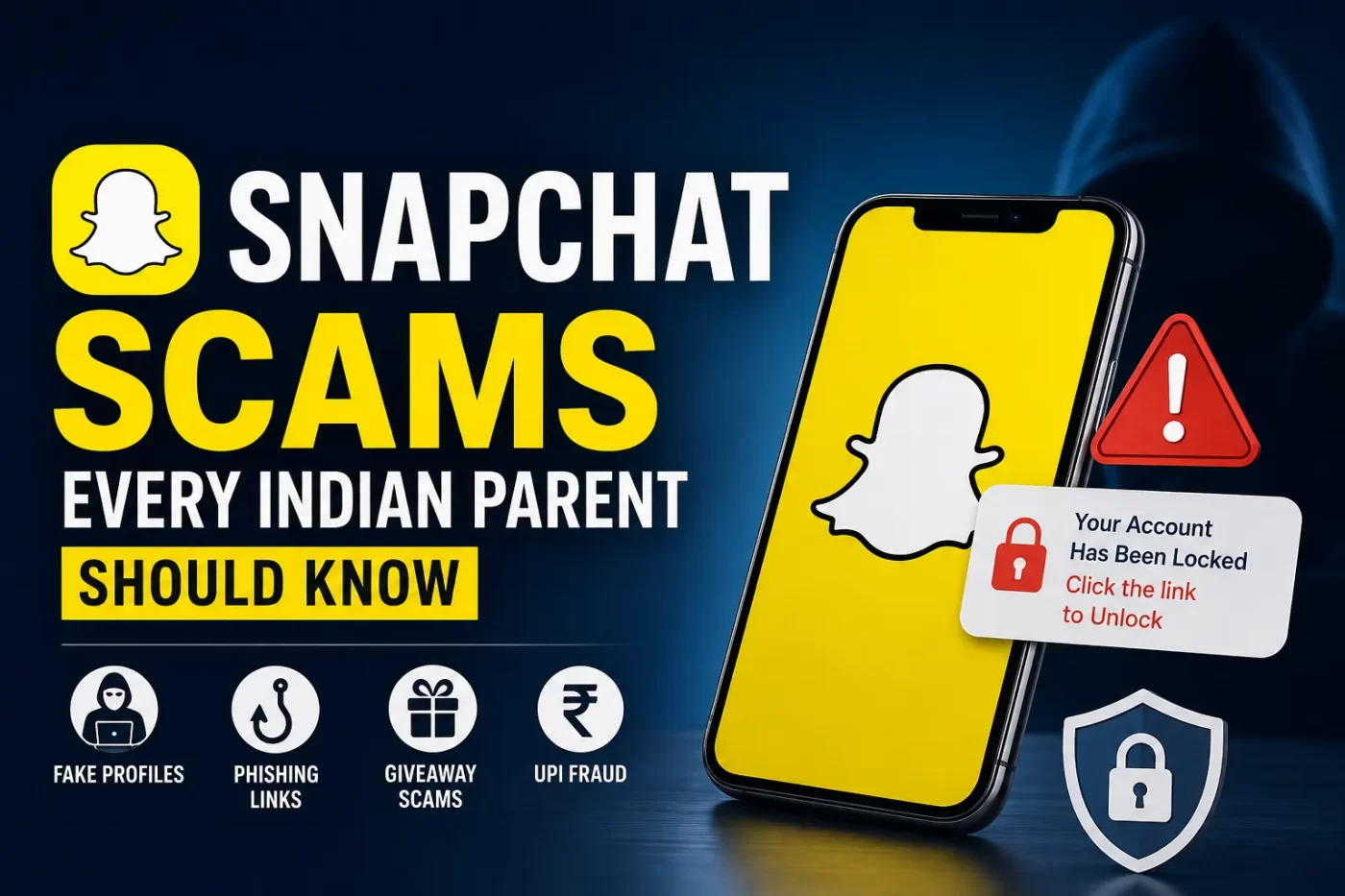

Snapchat scams are fraudulent schemes executed by cybercriminals to compromise user accounts, steal personal data, or extort money. Attackers deploy malicious tactics like phishing links, fake profiles, and specialized infostealers to bypass security measures, hijacking active sessions and orchestrating financial fraud across India’s digital platforms.
What are Snapchat Scams?
Millions of Indian internet users rely on social platforms for daily communication. Unfortunately, this massive adoption attracts threat actors. Modern Snapchat scams target unsuspecting individuals, students, and businesses by exploiting trust and platform gaps. Attackers use social engineering alongside technical malware to bypass basic security configurations.
Understanding how to avoid Snapchat scams requires a deep look into modern digital identity threats. Security boundaries have expanded past basic passwords. Today, attackers deploy complex structural methodologies to intercept your live data and gain unauthorized access.
How to Avoid Snapchat Scams in India
To build clean digital habits, you must recognize common attack patterns. Below is an analysis of operational variants active across India.
Spotting the Snapchat Account Hack Scam
The traditional Snapchat account hack scam has evolved. Attackers no longer rely solely on guessing weak passwords. Instead, they use coordinated password resetting attempts and credential stuffing. They cross-reference leaked data pools from dark web credential markets to find matching password variations you might reuse across multiple websites.
Once inside, hackers lock you out, alter verification settings, and target your contact list for quick financial gains.
The Mechanics of Snapchat Phishing Scams
Modern Snapchat phishing scams rely on urgent, deceptive communication. You might receive a message claiming your account faces immediate termination due to a policy violation. The message provides a link to resolve the issue.
This link leads to an adversary-in-the-middle (AiTM) phishing page. It mimics the official login interface, tricking you into inputting your credentials and verification codes in real time.
[User Interface] ---> [AiTM Phishing Server] ---> [Official Snapchat Server]
(Enters Login/OTP)     (Steals Session Cookie)      (Grants Attacker Access)
Unmasking Fake Snapchat Accounts and Catfishing
Creating fake Snapchat accounts takes only moments. Fraudsters download public pictures from other online platforms, using a quick reverse image search to find open profiles. They create highly deceptive duplicates to target users.
This sets up a dangerous catfishing campaign or a broader romance scam. The attacker carefully builds rapport before manufacturing an urgent personal crisis that requires fast financial transfers.
The Hidden Threat of the Snapchat Sugar Daddy Scam
The Snapchat sugar daddy scam specifically targets younger demographics and college students looking for financial flexibility. Fraudsters promise weekly allowances or direct cash gifts. They ask for an initial structural processing fee via UPI to authenticate your bank account.
After you send the payment, the scammer blocks your profile completely, leaving you with empty accounts and zero recourse.
Snapchat Giveaway Scam: Real or Fake?
You will often see public posts detailing high-value electronic distributions. The Snapchat giveaway scam promises free smartphones or expensive gaming consoles. To claim the reward, victims must click an external link, answer promotional surveys, and fill out detailed personal forms.
This data feeds identity theft pipelines. Worse, it often triggers background downloads of malicious payloads directly onto consumer devices.
The Technical Threats Behind Account Theft
Modern cyber fraud relies on technical exploits that bypass standard authentication checks. Secure setups need layered defenses to block these advanced tactics.
Understanding Cookie Hijacking and Infostealers
Most current attacks avoid your account password entirely. Attackers deploy malicious infostealers like RedLine, Lumma, or StealC malware through corrupted web downloads or cracked applications. Once executed, these programs target local browser data directories to steal saved session tokens and OAuth tokens.
+------------------------------------------------------------+
|                  HOW COOKIE HIJACKING WORKS                |
+------------------------------------------------------------+
| 1. User accidentally downloads an Infostealer (Malware).  |
| 2. Malware extracts active Session Tokens from browser.     |
| 3. Tokens are sent directly to Dark Web Cred Markets.       |
| 4. Scammer restores cookie; bypasses Password & MFA checks. |
+------------------------------------------------------------+
By harvesting these authenticated parameters, hackers perform a pass-the-cookie attack. They clone your active browser session directly onto their own machines, gaining complete account control without triggering traditional secondary verification blocks.
Mitigating Credential Stuffing and MFA Fatigue
If attackers cannot grab your active cookies, they use automated credential stuffing tools. They test thousands of previously leaked password combinations against your profile.
If you use two-factor authentication (2FA), criminals send repeated authorization requests to your phone. This creates MFA fatigue, tricking you into tapping “approve” just to stop the constant notifications. Moving toward device-bound session credentials and modern passkeys helps stop these attacks.
How to Report Snapchat Scam Incidents to Authorities
If you fall victim to an online trap, act quickly to limit the damage. Knowing how to report Snapchat scam operations shields your community and helps build official legal cases against threat groups.
-
Preserve Evidence: Take clean screenshots of the entire conversation, the fraudster’s profile, their Snapscore, and all transaction histories.
-
Alert the Platform: Access the specific profile, press down on the username, select the options menu, and tap report to alert platform moderators.
-
File an Official Cyber Complaint: Visit the official cybercrime portal India at cybercrime.gov.in to file a report. You can also call the dedicated national law enforcement hotline at 1930 for immediate help with UPI fraud.
How SiyanoAV Total Security Shields Your Digital Life
Standard device settings struggle to block modern, mixed cyberthreats. SiyanoAV Total Security delivers complete endpoint detection and response (EDR) to stop account takeover attacks before they start. Our automated defense engine blocks known infostealers and stops data extraction from browser files.
-
Real-Time Malicious URL Filtering: Blocks access to AiTM phishing networks and deceptive giveaway sites.
-
Advanced Anti-Malware Protection: Stops infostealers like Lumma and RedLine from lifting active session cookies.
-
Proactive Browser Cookie Protection: Locks down local data directories to prevent unauthorized data collection.
-
Lightweight Threat Architecture: Runs silent background security checks without slowing down system performance.
Summary of Common Snapchat Scams
| Scam Operational Type | Core Exploitation Vector | Primary Target Impact | Primary Defense Measure |
| AiTM Phishing Links | Deceptive Login Portals | Credential & Token Theft | Malicious URL Filtering |
| Cookie Hijacking | Lumma & RedLine Malware | Direct Account Takeover | Browser Cookie Protection |
| UPI Processing Fraud | Social Engineering Triggers | Immediate Monetary Loss | Strict Identity Verification |
| Credential Stuffing | Reused Password Lists | Automated Account Breaches | Unique Passwords & Passkeys |
| Giveaway Payload Delivery | Corrupted Software Downloads | Host Device Compromise | EDR Real-Time Scanning |
-
Token Security: Cybercriminals use session hijacking to bypass traditional password requirements and multi-factor authentication defenses.
-
Malware Interception: Infostealers like Lumma extract browser cookies to execute unauthorized pass-the-cookie account takeovers.
-
Financial Fraud: Sugar daddy and fake giveaway scams target Indian users to siphon funds via deceptive UPI requests.
-
Legal Action: Victims must preserve screenshots and file complaints immediately via the official Indian cybercrime portal.
-
Proactive Defense: Implementing SiyanoAV Total Security stops data-harvesting malware from accessing local system storage directories.
Snapchat scams in India have evolved from simple social engineering tricks into complex, technical cyberattacks. Attackers deploy automated infostealers like RedLine, StealC, and Lumma malware through third-party web downloads to copy local browser cookies. This allows them to run pass-the-cookie attacks, hijacking active session tokens and OAuth tokens to bypass passwords and Multi-Factor Authentication. Alongside these automated attacks, fraudsters use fake profiles and deceptive giveaways to trick users into sending money via UPI fraud. Comprehensive endpoint security solutions like SiyanoAV Total Security are essential to block these data-harvesting tools and keep accounts safe.
| Security Defense Matrix | Standard Free Antivirus | Native OS Firewall | SiyanoAV Total Security |
| Infostealer Identification | Signature Database Only | Network Port Blocking Only | Behavioral EDR Analysis |
| Session Cookie Protection | No | No | Active Directory Locking |
| Phishing Link Verification | Limited Browser Extension | No | Real-Time DNS Filtering |
| MFA Fatigue Protection | No | No | Host Integrity Validation |
| Malware Payload Execution Block | Post-Download Alert | Basic Inbound Rule | Zero-Day Proactive Sandbox |
-
Certified Security Experts: Built by certified cybersecurity professionals specializing in threat analysis and endpoint detection.
-
Enterprise-Grade Technology: Powered by proactive malware analysis engines used by global IT administrators.
-
Dedicated Indian Support: Direct alignment with Indian cybersecurity standards and direct support channels.
-
Verified Malware Detection: High-performance detection rates verified against modern infostealer variants.
-
Zero-Risk Trial: Fully operational, commitment-free 30-day security trial available for download.
-
Transparent Privacy Architecture: Localized data scanning protocols that protect customer privacy.


Leave a Comment