

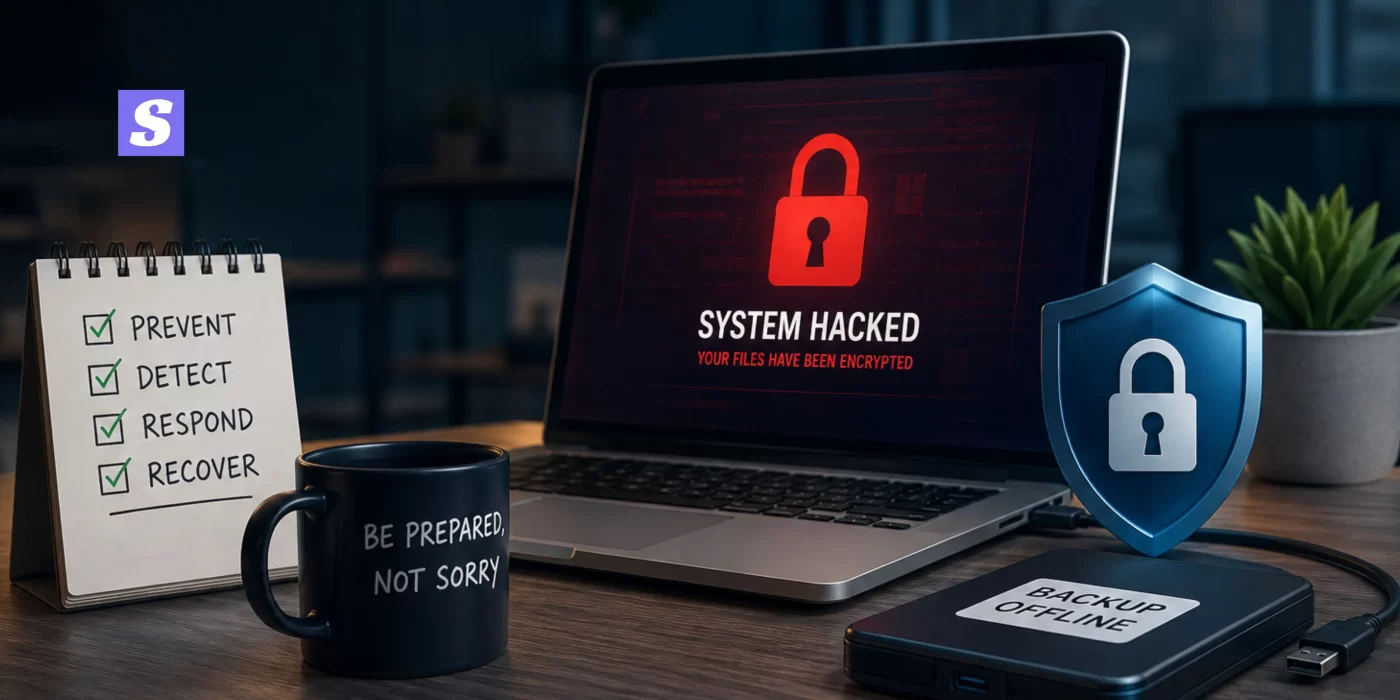

Here’s the thing. Most small business owners think hackers only care about giant corporations. That’s where most people get it wrong. I talk to local shop owners and tech founders every week, and they all assume they are too small to be targeted. The truth is, malicious actors love targeting smaller setups because their digital doors are usually wide open. Experiencing a breach is painful, but figuring out a realistic small business cyberattack recovery path afterward is the part that actually breaks a company.
Let’s be real for a second. If you wake up tomorrow and find all your customer invoices encrypted by ransomware, what do you actually do? Most folks panic, and honestly, I don’t blame them. Without a clear strategy, your post-incident plan will stall before it even starts.
The Reality of Small Business Cyberattack Recovery
When you look at the top-ranking blogs on this topic, they always hit you with boring, textbook definitions. They say things like “cyber incidents disrupt operational continuity.”
Let’s translate that into plain English. It means your staff can’t log in, you lose orders, customers get furious because their private data just leaked online, and you are stuck paying developers crazy hourly rates to fix the mess.
Can a small business survive a ransomware attack? Yes, but executing a successful small business cyberattack recovery process is incredibly rare if you are just winging it. The cost of a breach isn’t just the ransom money; it’s the weeks of complete business downtime that paralyze your cash flow. If you’re running a lean operation, two weeks of zero revenue while paying salaries will wipe out your reserves entirely and completely stall your long-term small business cyberattack recovery efforts.
Why Small Businesses Fail After a Cyberattack
It usually comes down to trust and cash flow. If a local clinic or an e-commerce startup suffers a major data leak, customers leave instantly. Reputation takes years to build and about five minutes to destroy. When your brand value takes that kind of hit, the roadmap for small business cyberattack recovery becomes steep, complex, and incredibly expensive.
Most failures happen because founders underestimate the systemic friction involved in a sudden small business cyberattack recovery timeline, assuming data simply transfers back with the click of a button.
Here is how the recovery process looks when you have a plan versus when you’re just hoping for the best:
| The “We Have a Plan” Approach | The “Winging It” Approach |
| Backups: Clean, isolated copies of data ready to restore in hours. | Backups: Plugged into the main network, got encrypted by the hacker too. |
| Customer Response: Transparent communication that preserves long-term trust. | Customer Response: Radio silence, leading to rumors and legal trouble. |
| Downtime: 24 to 48 hours of messy but manageable halting. | Downtime: Weeks of trying to rebuild everything from scratch. |
| Cost: Minor financial hit, mostly IT consultant fees. | Cost: Catastrophic loss that often forces permanent closure. |
Practical Steps to Shield Your Business
You don’t need a multi-million dollar budget for basic digital security. You just need to stop making it easy for hackers so you never have to go through a forced, catastrophic small business cyberattack recovery crisis when resources are low.
First, get your backups off the main network. If your backup drive is constantly plugged into the main server, a ransomware virus will infect it too. Keep it separate. Second, force your team to use two-factor authentication (2FA) everywhere. It’s annoying, I know. But it stops a massive chunk of automated attacks and keeps your primary operations secure enough to bypass an expensive small business cyberattack recovery intervention later.
For a complete breakdown of essential protocols, you can review our internal checklist on setting up office data guardrails to patch up common vulnerabilities before they get exploited by external threats.
“I’ve seen businesses shut down permanently because they thought a basic antivirus software from years ago was enough protection. It isn’t. If you aren’t actively testing whether your data backups actually work, your plan for small business cyberattack recovery is nonexistent.”
— Anand K., Independent IT Systems Auditor
If you want to check your current setup against formal baselines, take a look at the standard community guidelines sheet on the CERT-In Official Portal for basic network hygiene.
Now, if you see signs your business has been hacked—like weird password reset emails or sluggish server performance—don’t wait. Implement your defense measures today. Start with employee training, because a single clicked link in a phishing email can bypass your expensive firewall and complicate your internal small business cyberattack recovery pipeline.
The Next Step
You don’t need to become a tech genius overnight to keep your venture safe. Just take it one step at a time. Change your administrative passwords today, call your hosting provider, and ask how they protect your data.
Honestly, investing a weekend into securing your digital assets is a lot better than dealing with a stressful, uphill small business cyberattack recovery process later down the line when everything is already on fire.
Common Questions Small Business Owners Ask
What happens to a small business after a data breach?
Your operations usually grind to a halt. You lose access to customer records, face potential legal fines under local privacy laws, and face a massive drop in customer trust that directly impacts your revenue.
How much does a cyberattack cost a small business in India?
It varies, but even for a small firm, the costs of hiring forensic tech support, paying legal fees, and dealing with lost business hours easily run into lakhs of rupees.
How to protect small business from cyberattack in India?
Start by enforcing strong password managers, turning on multi-factor authentication on all company emails, keeping all software updated daily, and keeping your critical data backups completely offline.
Can a hacked business recover its data without paying a ransom?
Yes, if you have a clean backup that was stored separately from the compromised network. Paying the hackers rarely guarantees you get your files back anyway.
What is the first thing to do if my business gets hacked?
Disconnect the affected computers from the internet immediately to stop the breach from spreading across your entire office network. Then, bring in an IT expert to assess the damage.


Leave a Comment