

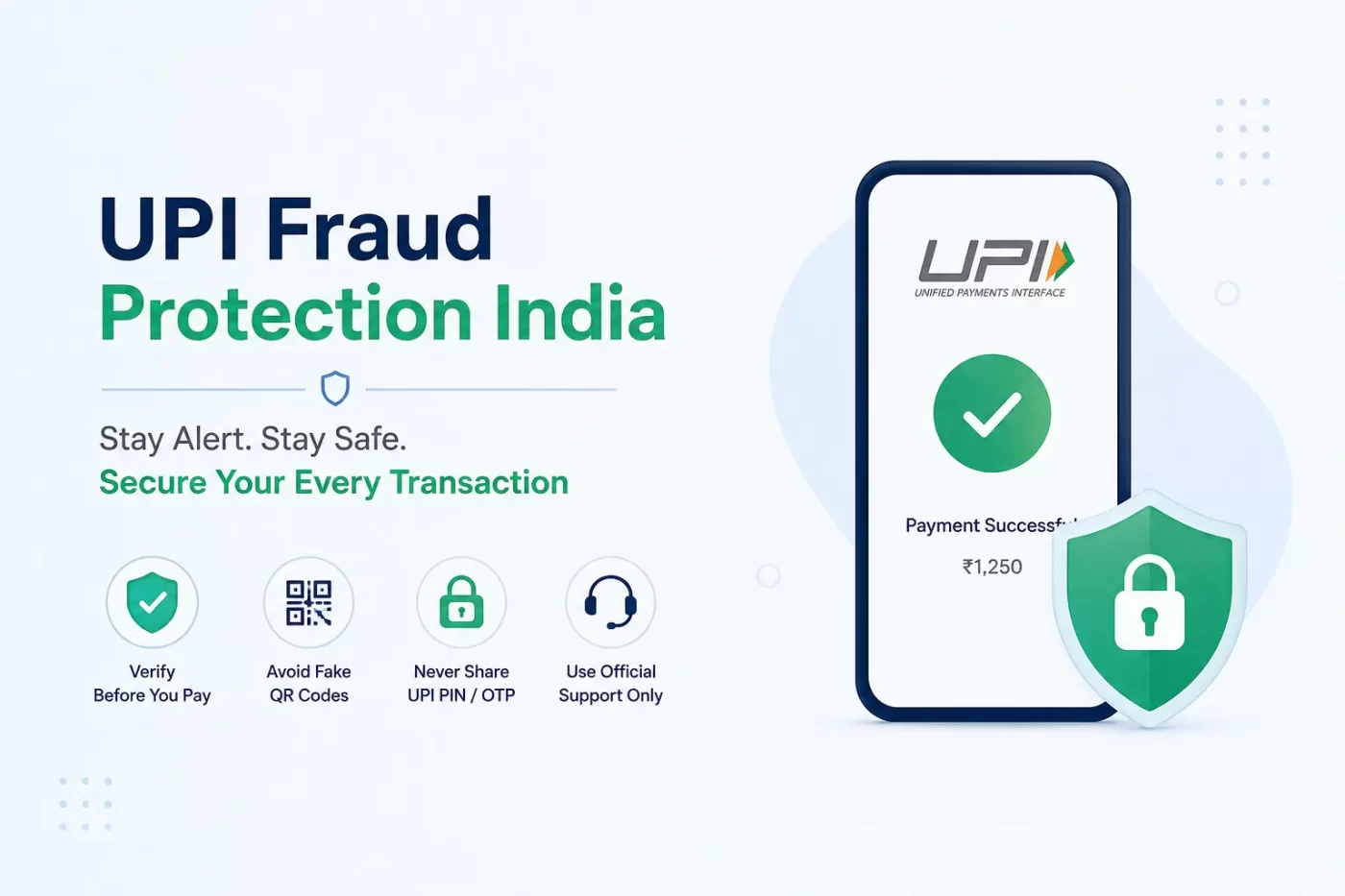

UPI fraud protection India is becoming essential as online banking scams continue to rise across the country. With the rapid growth of digital payments, understanding UPI fraud protection India is no longer optional—it is a necessary step to keep your money safe. Every transaction today carries risks like phishing, fake payment requests, and QR code scams, which makes strong awareness and safe digital habits extremely important for all users in India.
UPI Fraud Protection India: What It Is
UPI fraud protection is a layered combination of smart habits, security tools, and behavioral awareness designed to keep your bank account safe when transacting through the Unified Payments Interface. It includes everything from hiding your secret PIN and double-checking who you are transferring money to, to spotting psychological mind games and acting fast if you suspect something fishy.
FOUR COMMON UPI FRAUDS YOU NEED TO KNOW
To beat fraudsters, you first have to think like one. These attackers rely on confusion and urgency to push victims into mistakes. Here are the four most dangerous tactics being used right now.
1. The Fake UPI Payment Screenshot Trick
Small shop owners and individual sellers are prime targets for this scam. Scammers now use specialized third-party apps to create incredibly realistic fake UPI payment screenshots. These deceptive images come complete with a valid-looking UTR number, accurate transaction timestamps, and official bank logos to easily trick unsuspecting sellers. The image looks so authentic that sellers hand over their product without ever verifying whether the actual amount landed in their account. Always check your bank balance or SMS alert directly, never trust a payment screenshot alone.
2. The Deceptive QR Code Scam India
“Click or scan here to get your cashback”—it looks completely innocent at first glance, but that’s exactly how they fool you. But in a typical QR code scam India case, a fraudster sends a QR code over WhatsApp or email, claiming it will deposit a prize, refund, or resale payment into your account. The moment you scan it and enter your PIN, money moves out — not in. Remember this rule without exception: a UPI QR code can only pull money from your account. It can never push money into it.
3. SIM Swap Fraud UPI Attack
Among all UPI scams, SIM swap fraud UPI stands out as the most technically advanced. Attackers gather your personal details through phishing links or leaked databases, then walk into a telecom store armed with forged documents and request a duplicate SIM card. The instant your original SIM goes silent, the attacker controls your phone number, intercepts your OTPs, resets your banking credentials, and begins draining your linked accounts — often before you realize your SIM has stopped working.
4. Fake Customer Care Numbers
Scammers manipulate search engines by setting up fake bank customer care sites that appear right at the top of Google results to trap unsuspecting users.When a worried user searches for their bank’s customer care number and calls the fake one, the “agent” guides them through a so-called “verification payment” — a ₹1 transaction that actually authorizes a large debit from the account. Always source customer care numbers directly from your bank’s official website or the back of your debit card.
UPI Fraud Protection India Cybersecurity Tips for Users
You don’t have to be a tech wizard or a cyber expert to keep your bank account safe from scammers. A handful of consistent habits will shut the door on the vast majority of scams targeting everyday users.
Actionable UPI PIN Safety Tips
— No bank, payment app, or government authority will ever call you to ask for your UPI PIN or OTP. Disconnect such calls immediately.
— Make it a habit to change your UPI PIN every few months. Avoid using easily predictable numbers like your birth year, car number, or simple sequences like 1234 or 1111 that anyone can guess.
— When entering your PIN in public — at a grocery store, fuel pump, or food stall — cup your hand over the screen. Shoulder surfers and overhead cameras are more common than you think.
Verify Every Transaction Before You Approve
Give yourself three seconds before entering your PIN. Read the displayed name of the payee carefully inside the app, not just a handwritten label on a shop counter. If you receive an unexpected collect request from an unfamiliar UPI ID, reject it immediately and block the contact within your payment app.
WHAT TO DO IF YOU GET SCAMMED?
Speed is everything after a UPI fraud. A fast, methodical response can sometimes stop the stolen funds before they are moved further.
Step 1 — Lock Down Your Accounts Immediately
Open your UPI app or call your bank’s emergency helpline right away and freeze your UPI account. Ask the bank representative to also place a temporary block on your linked account so no further debits are possible.
Step 2 — File an Official Report
Dial 1930 — the national UPI fraud complaint helpline India — within the first few hours of the incident. Simultaneously, lodge a complaint on cybercrime.gov.in. Keep your transaction ID, the exact timestamp, and any screenshots of suspicious conversations ready before you call.
Step 3 — Visit Your Branch and Raise a Dispute
Head to your nearest bank branch and submit a written dispute letter in person. Under RBI’s limited liability guidelines, if you report an unauthorized transaction within three working days, the bank is obligated to investigate the matter and initiate the recovery process on your behalf.
CONCLUSION
Staying safe while transacting digitally is not a one-time setup — it is an ongoing mindset. Think of your UPI wallet the way you would treat a physical wallet stuffed with cash in a crowded market. Never skip the verification step, stay skeptical of unsolicited payment requests, and review your security settings regularly. True peace of mind with online payments comes not from fear, but from the confidence of knowing exactly what to watch for.




Leave a Comment