

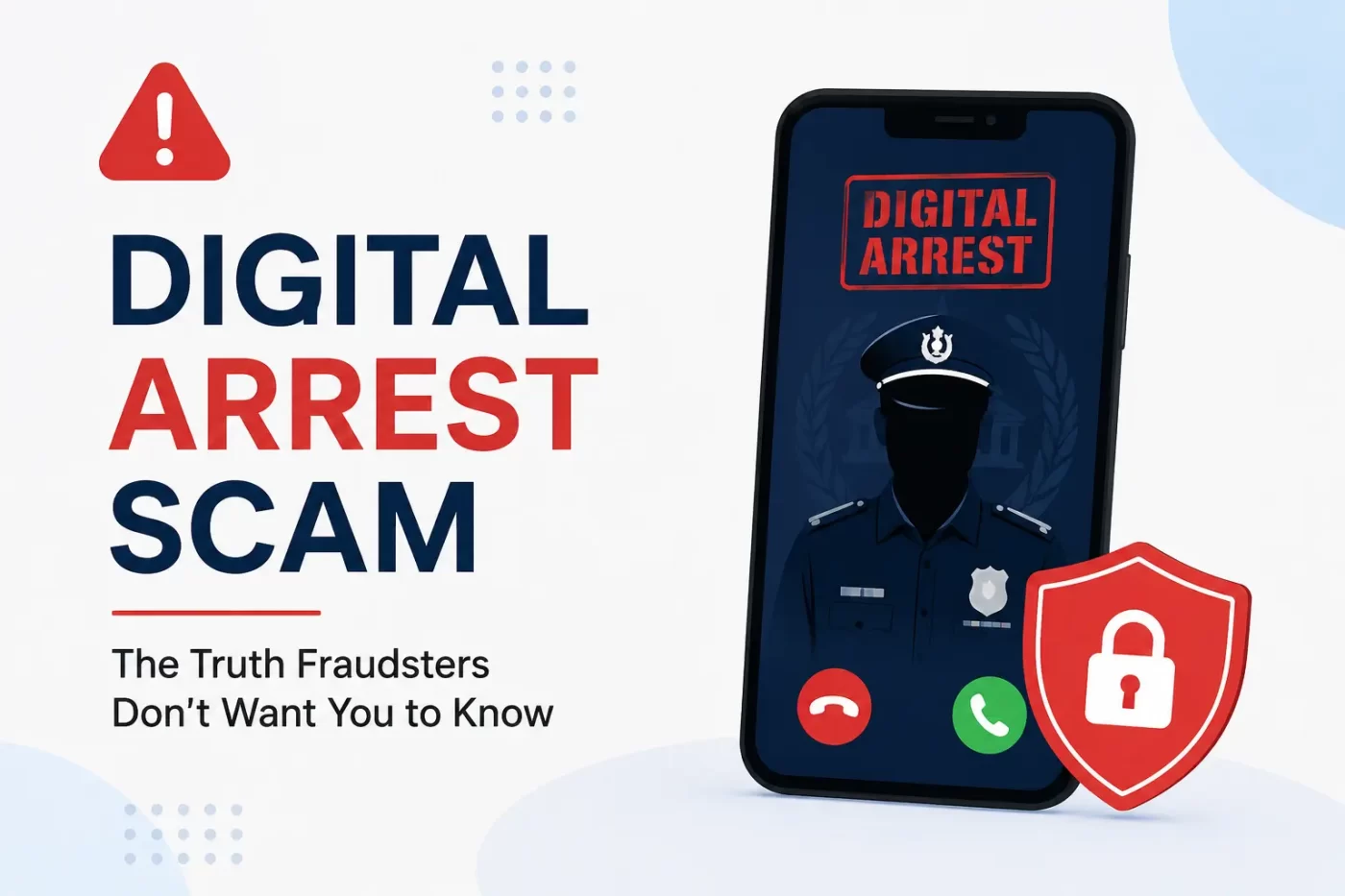

The digital arrest scam starts with a phone call while you’re drinking your morning tea. The guy on the line claims he’s a senior officer from the CBI or Mumbai Police. He even looks official over a Skype video call, complete with a dark uniform and a background that looks like a real police station. He says your Aadhaar number was found tied to a money laundering case or an illegal parcel sent abroad. Then comes the phrase that freezes most people in their tracks: “You are under digital arrest.”
Here’s the thing—it’s all a massive lie. The digital arrest scam is rapidly draining bank accounts across India, yet thousands still fall for it every single month simply because they panic.
Is a Digital Arrest Scam Legal in India?
Let’s clear this up right away: digital arrest does not exist in Indian law.
No police officer, judge, or CBI investigator will ever keep you hostage over a video call. Real law enforcement officers don’t issue official arrest warrants via WhatsApp text messages. They definitely don’t ask you to transfer money into a “safe government verification account” to prove your innocence.
That entire setup is purely a psychological trap engineered by cybercriminals to make you act before you think.
How Does the Digital Arrest Scam Work?
Honestly, these scammers are good at what they do. They don’t just jump in and ask for cash right away; they build intense psychological pressure first.
-
The Initial Hook: You receive an automated call claiming a courier parcel in your name contains illegal passports, drugs, or fake IDs.
-
The Escalation: They transfer your call to a fake police officer operating a video call scam network.
-
The Isolation: They order you to stay alone in a closed room and forbid you from hanging up or talking to family members, claiming it’s a matter of “national security.”
-
The Demands: Once sheer panic sets in, they instruct you to execute a digital arrest scam money transfer via UPI or RTGS to “clear your name.”
Even the smartest IT folks and business owners lose their cool when a fake cop threatens them on camera. Yet, when a person in an official police uniform threatens immediate jail time on live camera, logic usually flies out the window.
Important Note: Real government authorities in India will never demand immediate money transfers over the phone to clear criminal charges.
The One Thing Scammers Don’t Want You to Know
Scammers rely completely on two things: your terror and your speed.
If you take a deep breath, disconnect the call, and tell a family member or friend, their entire criminal script falls apart instantly. They need you kept line-by-line on video camera so you never get a free minute to verify their claims on the official National Cyber Crime Reporting Portal (1930).
What Should You Do If You Get a Digital Arrest Call?
If your phone rings with this exact scenario, here is your step-by-step game plan:
-
Disconnect immediately. Slam that red end-call button immediately. You don’t owe a fake cop any explanation.
-
Never send funds. No legitimate law enforcement agency conducts financial audits through private bank transfers.
-
Report the incident. Contact your bank right away if any details were shared, dial 1930, or lodge a formal complaint with the official I4C Cybercrime Helpline.
Stay Protected with the Right Security Tools
Scams like these often begin long before the phone call happens. Criminals obtain your name, phone number, and address from data leaks or malicious links clicked on unsecured devices. Keeping your systems shielded from spyware and phishing redirects is your first defense line.
Whether you manage workstations at an office, handle school networks, or simply want to keep your home laptops secure, real-time cyber protection is essential. Take a look at SiyanoAV Antivirus Solutions to safeguard your family and business devices against malware, data leaks, and phishing links that scammers use to gather personal intelligence on you.
At the end of the day, understanding how the digital arrest scam functions is your best defense. Stay alert, refuse to let threats intimidate you, and always double-check facts before trusting a stranger on your phone screen.


Leave a Comment